
Holding: The Milwaukee test is used to determine if a color mark is generic. The Milwaukee test asks: (1) What is the genus of goods or services at issue? (2) Is the color sought to be registered, or retained on the register, understood by the relevant public primarily to refer to that genus of goods and services?
Medisafe applied for registration of a color mark for use on medical examination gloves. The application described the proposed mark as a dark green color applied to the entire surface of the goods which consist of chloroprene examination gloves. Medisafe also included a drawing of the mark and a specimen with its application.
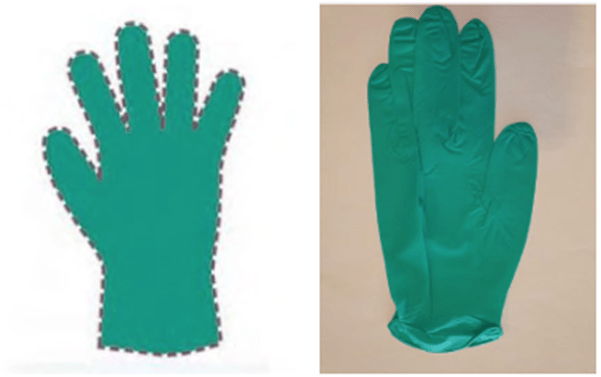
The examining attorney at the PTO found the dark green color to not be inherently distinctive, and required a showing of acquired distinctiveness to place the mark on the principal or supplemental register. Medisafe provided a declaration from its Executive Vice President, promotional literature, and color photographs and advertisements showing competitive goods in the industry. However, after reviewing these materials, the examining attorney determined that the proposed color mark was generic and had not acquired distinctiveness.
On appeal, the TTAB evaluated the genericness determination using a modified version of the Marvin Ginn test, a test that is typically used to determine if a mark is generic. This modified test is tailored to color marks and was first set out in Milwaukee Electric Tool Corp. v. Freud America, Inc., 2019 WL 6522400 (T.T.A.B. Dec. 2, 2019). The Milwaukee test states: (1) first consider the genus of goods or services at issue, and (2) second consider whether the color sought to be registered or retained on the register is understood by the relevant public primarily as a category or type of trade dress for that genus of goods or services. Upon application of the Milwaukee test, the TTAB agreed with the examining attorney in finding the color mark to be generic because it so common in the chloroprene medical examination glove industry.
The Federal Circuit agreed with the TTAB’s approach of using the Milwaukee test to determine genericity of a color mark. The Milwaukee test is consistent with the Marvin Ginn test was developed by the Federal Circuit to evaluate genericness for wordmarks. The only difference is that the Marvin Ginn test asks “whether the term sought to be registered . . . is understood by the relevant public primarily as a category or type of trade dress for that genus of goods or services,” while the Milwaukee test changes the word “term” to “color.”
Medisafe argued that the statutory language of the Lanham Act only allows cancellation of a mark for genericness when the mark is a “generic name.” This argument is based on 15 U.S.C. § 1064(3) which states that a registered mark may be cancelled “if the registered mark becomes the generic name for the goods or services.” However, the Federal Circuit took an expansive view of the term “generic name” to encompass anything that has the potential to serve as an indicator of source, such as color. This expansive interpretation upholds the purpose of the Lanham Act, and prevents potential source identifiers, such as color or trade dress, from having more protection than a word mark.
After applying the Milwaukee test, the Federal Circuit upheld the TTAB’s finding that Medisafe’s proposed color mark is generic. For the first prong, Medisafe argued that the genus of goods should be chloroprene medical gloves sold only to authorized resellers. However, the Federal Circuit found that the TTAB appropriately identified the genus of goods to be the broader category of all chloroprene medical examination gloves. For the second prong, evidence of third-party sellers offering the same or nearly the same color gloves as the proposed mark, combined with relatively conclusory customer declarations offered as evidence of distinctiveness, showed that the color mark did not act as a source indicator.

 Federal Circuit Precedential
Leave a comment