
Holding: A district court may impose deterrence sanctions to dissuade from frivolous filings under its inherent power in addition to awarding attorney fees and costs under 35 U.S.C. §285.
PSP owns US Design Patent No. D680,188 which claims a long-spiked electrode for a stun device. PSP filed suit against Panther, alleging infringement of the D’188 Patent. In response, Panther sent a Rule 11 and a draft motion for Rule 11 sanctions letter to PSP alleging that the infringement allegations were frivolous because the Panther product was plainly dissimilar to the PSP’s patented design and because venue in the Eastern District of Arkansas was improper. Panther also identified a marketing brochure from PSP that qualified as prior art against the D’188 Patent and illustrated a design nearly identical to the design claimed in the D’188 Patent. After the prior art brochure was discovered, PSP moved to voluntarily dismiss the case. Panther filed a motion for attorney fees and costs under 35 U.S.C. §285 and for deterrence sanctions under the inherent power of the court. The district court found the case to be exceptional under Section 285 and ordered PSP to pay attorney fees and costs and also $25,000 in deterrence sanctions.
PSP did not appeal the award of attorney fees and costs, but argued that the district court erred by awarding the deterrence sanctions when it had already awarded attorney fees and costs under Section 285. Typically, Section 285 does not prevent a district court from imposing separate sanctions or fees in addition top of attorney fees, for example sanctions under Rule 11. However, in this case, Rule 11 sanctions were not available because PSP dismissed the case before Panther could file a Rule 11 motion. The Federal Circuit did not see any reason to view sanctions stemming from the court’s inherent power any differently than Rule 11 sanctions. Therefore, the Court found the district court’s deterrence sanction in addition to the award of attorney fees and costs to be allowable.
The Federal Circuit also found that the facts of the case supported the district court’s award of both attorney fees and deterrence sanctions. PSP did not state a plausible claim of design infringement, as their claimed design and the design of the accused product was plainly dissimilar. The Court found that no ordinary observer would be deceived into believing that Panther’s product was the same as the patented design.
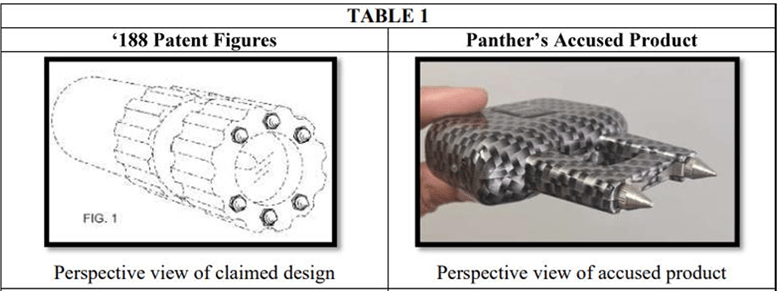
PSP also erred by citing the general venue statute 28 U.S.C. §1391 rather than the patent-specific venue statute, 28 U.S.C. §1400. Under section 1400, in a patent case, venue is proper “where the defendant resides, or where the defendant has committed acts of infringement and has a regular and established place of business.” Panther resides in Maryland, since that where Panther is incorporated. Panther also does not have a regular and established place of business in Arkansas, where the PSP filed the case. Therefore, venue is not proper in Arkansas. PSP also has a history of filing meritless lawsuits, having filed 25 patent infringement cases since 2010. A total of 13 of those cases were dismissed before or very soon after answers were filed. The total quantity of cases filed does not make a case exceptional on its own; however, a party’s history of filing meritless lawsuits may be used to show that a case is exceptional.

 Federal Circuit Precedential
Leave a comment